If you built your own website, hit publish, and waited for visitors to arrive, but the traffic never came, you are not alone. A beautiful website does not automatically attract the right people. Your site needs a clear strategy that helps search engines understand it, gives your audience a reason to visit, and guides those visitors toward taking action.

Low website traffic rarely comes down to one mistake. It is usually a combination of unclear messaging, weak search visibility, limited content, technical issues, and inconsistent promotion. The good news is that each of these problems can be identified and improved.
As web developers, we consider all of these pieces when we build or revamp a client’s website. We do not treat a website as a collection of attractive pages. We create it as part of a larger marketing system, one designed to help the right people discover the business, understand its value, and take the next step.
Why is your website traffic low?
1. Search engines do not understand what your website is about
Google cannot recommend your website if it cannot confidently understand what you offer, who you serve, and where you work. If your pages use vague headlines, very little copy, or language that is so niche or quirky that it only speaks to you, your audience is going to have trouble finding your site.
For example, a headline like “Helping You Thrive” may sound welcoming, but it does not tell a search engine, or a new visitor, whether you are a nutritionist, business coach, real estate agent, or web designer.
When we work with clients, we help clarify their positioning, even bringing in expert copywriters at times to organize their website around the language that clearly explains their services and topics to their audience in a way that search engines look for.
Additionally, we bring a neurodiversity lens to the user’s experience while ensuring that search engines can still crawl the site easily. We use descriptive page titles, and design with an intentional page structure so the website communicates effectively with both humans and search engines.
What you can do:
Review each page and ask whether a new visitor could quickly identify what you do, who you help, and what makes your offer different. Give every core service room to breath, instead of listing everything in a few sentences on your homepage. Use specific phrases your ideal clients would type into a search engine. Add a clear page title and meta description to every important page.
2. Your website does not have enough useful content
A five page website can explain your business, but it may not give search engines many opportunities to explore your expertise. Every useful, well planned page or blog post can help your site appear for another question, need, or search phrase.
This does not mean publishing generic content just to keep a blog active. Your content should answer real questions, address common concerns, demonstrate your approach, show your authenticity and connect readers to an appropriate service.
For our clients, we build content around their customer journey and what interests their audience. We identify what someone needs to understand before they are ready to inquire, then create useful pathways between educational content and service pages. This helps a website earn visibility while also building trust.
What you can do:
Write down the ten questions prospective clients ask most often. Turn each substantial question into a helpful blog post, FAQ, or resource. Create content for people at different stages, from recognizing a problem to comparing possible solutions. Link each article to a relevant service and next step. Update older content when your services, audience, or industry changes.

3. Your website is technically difficult to find or use
Technical issues can quietly limit your traffic. Slow load times, broken links, missing mobile optimization, confusing navigation, or pages that search engines cannot index may all reduce your visibility.
These issues also affect real people. If a page is slow, cluttered, or difficult to navigate on a phone, visitors may leave before they ever learn what you offer. That behavior can make your marketing less effective even when people do reach the site.
Our website process includes more than visual design. We pay attention to structure, mobile usability, page organization, calls to action, and the technical details that support discoverability. We want the finished website to look like the business while also working as a practical marketing tool.
What you can do:
Test your site on a phone, tablet, and desktop. Check that every menu item and button works. Compress oversized images that slow down your pages. Make sure your text is easy to read and your navigation is simple. Confirm that your important pages can be indexed by search engines. Connect your site to Google Search Console and submit your sitemap.
4. You are not consistently sending people to your website
Search traffic takes time to grow. If your website is new, or if you rarely share it, you cannot rely on Google alone to bring in visitors.

Your website should be the home base for your marketing. Social posts, newsletters, directory profiles, podcast appearances, partnerships, and local networking can all create pathways back to it. It should act as your digital resume. If your content lives entirely on social media, your audience may engage with a post without ever exploring your services. Here’s a few places people often overlook adding where you an add backlinks to your website:
Google Business Profile
Pinterest
LinkedIn
Reddit
Nextdoor
Social Media
When we help clients plan their websites and marketing, we look for ways to connect those channels. A blog can become a newsletter topic, several social posts, a conversation starter, and a resource to send to a prospective client. That coordinated approach helps every piece of content work harder.
What you can do:
Add your website to every social profile and professional directory. Share specific pages or articles, not only your homepage. Use your email newsletter to send readers to useful website content. Look for trusted partners who can link to your resources. Reuse each blog topic across multiple marketing channels.
5. Your messaging is attracting the wrong audience, or no clear audience at all
Traffic is not only a numbers problem. One hundred relevant visitors can be more valuable than one thousand people who are unlikely to become clients.
If your website tries to speak to everyone, the right people may not recognize themselves in it. Unclear offers can create the same problem. Visitors might arrive but leave because they cannot tell whether your service fits their needs.
We help clients define the audience, message, and action for each page before making design decisions. This creates a more focused experience and gives the website a better chance of attracting qualified traffic, not just more traffic.
What you can do:
Describe your best fit client in specific terms. Review whether your language reflects that client’s actual goals and concerns. Make your services, process, and next steps easy to understand. Use clear calls to action throughout the site. Remove content that distracts from your strongest offers. and if all else fails, it might be time to hire a copywriter, they can be suprisingly affordable!
6. You are not reviewing your analytics
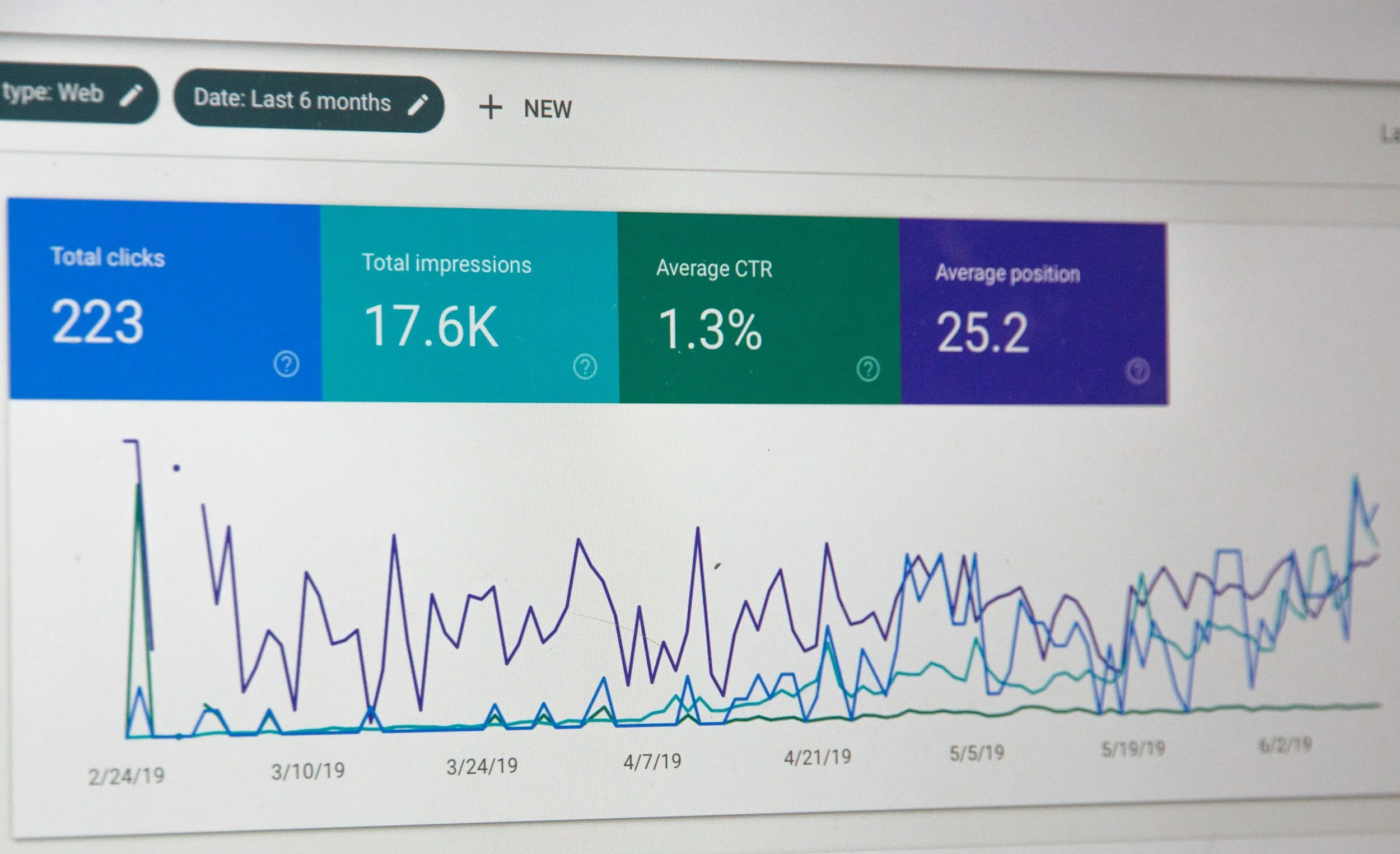
Without analytics, it is easy to guess at the wrong problem. You may assume that no one is visiting when traffic is actually reaching one page but failing to convert. You might be getting found for irrelevant search terms, losing mobile visitors, or relying too heavily on one source of traffic.
Analytics can show where visitors come from, which pages they view, how they move through the site, and where they leave. Search data can reveal which queries already create impressions and which pages have room to improve.
For our clients, analytics are part of making informed website decisions. Rather than recommending random changes, we look for evidence: visibility gaps, underperforming pages, user behavior, and missed conversion opportunities. That information helps us prioritize the improvements most likely to matter.
What you can do:
Confirm that an analytics platform is installed and collecting data correctly. Review your traffic sources: search, social, email, referrals, and direct visits. Identify your most visited and least visited pages. Check which pages lead to inquiries or other meaningful actions. Compare mobile and desktop behavior. Review Google Search Console for search queries, impressions, clicks, and indexing issues.
A basic website traffic checklist to get started:
[ ] My homepage clearly explains what I do, who I serve, and what visitors should do next.
[ ] Each primary service has a dedicated, informative page.
[ ] My page titles, headings, and descriptions use clear language people are likely to search for.
[ ] My website works well on mobile devices with no long spaces or overlapping.
[ ] My pages load quickly and do not contain broken links.
[ ] Google Analytics and Google Search Console are connected.
[ ] I publish content that answers real questions from prospective clients.
[ ] My blog posts link to relevant services and calls to action.
[ ] I regularly direct people to my website through email, social media, partnerships, or other channels.
[ ] I review my analytics instead of relying on assumptions.
[ ] My website makes it easy for the right visitor to contact me, book, buy, or inquire.
Instead of guessing and hoping, your website needs a strategy.
Low traffic does not necessarily mean your website is a failure. It means there is a gap somewhere between your audience, your message, your search visibility, your marketing, and the experience your site provides. The challenge is identifying which gap is holding you back.
If you’ve tried all of these tips or know that it will honestly be hard for you to accomplish with the plethora of other things on your plate, reach out! We can help bring together website strategy, design, development, messaging, SEO considerations, and marketing insight to create steps that support real improvements. We can review your analytics, evaluate how people are finding and using your site, and identify the changes that could make the biggest difference.
Ready to understand what is keeping your website traffic low?